
Top 8 Types of Lube: How to Choose the Best Lube for Pleasure, Comfort & Sex Toys
Last Updated: 08/27/2026
Your Guide to Choosing the Best Lube for You
Nobody hands you a manual for this, so let's clear up the myth first: lube isn't what you reach for when something isn't working. Using lube isn’t evidence that anything's wrong with you or your body.
It's an upgrade, and one most people discover far later than they should have.
Your body isn't a switch you can flip on demand. Stress, hormones, hydration, medication, your cycle, even the season can all change your natural moisture, independent of how turned on you actually are. And even on a day when everything's working exactly as it should, added glide can take something good and make it something you actually remember.
So whether you're alone, with a partner, or bringing a new toy into the mix: if something is going to move, glide, or enter the body, lubricant belongs in that plan from the start, not as a fix reached for halfway through.
Table of Contents:
- What is lube?
- When should you use lube?
- How to Use Lube
- How to Choose the Right Lube
- Top 8 Types of Lube
- How to Avoid Ruining Your Toys with the Wrong Lube
- What NOT to Use for Lube
- What is the best lube for anal play?
- Is lube safe for shower sex?
- Can you eat lube?
- Ingredients to Watch Out For
- Frequently Asked Questions:

What Is Lube, Exactly?
Lube (short for lubricant) is a liquid or gel made to reduce friction during sex, masturbation, or sex toy play. Nothing more complicated than that, even though the options can look overwhelming at first glance.
But not all lubes are made the same! Rather than grabbing whatever's cheapest, it’s important to choose based on what you want to do with it. Different lubes can be made for different uses: some prioritize easy cleanup, some prioritize staying slick for an hour, some are built specifically to be safe with condoms or particular sex toy materials, some are made to be extra moisturizing, and the list goes on.
The best lube is the formula that matches what you're actually doing.
When Should You Use It?
Short answer: whenever you want to. There's no threshold of "not wet enough" you need to hit first.
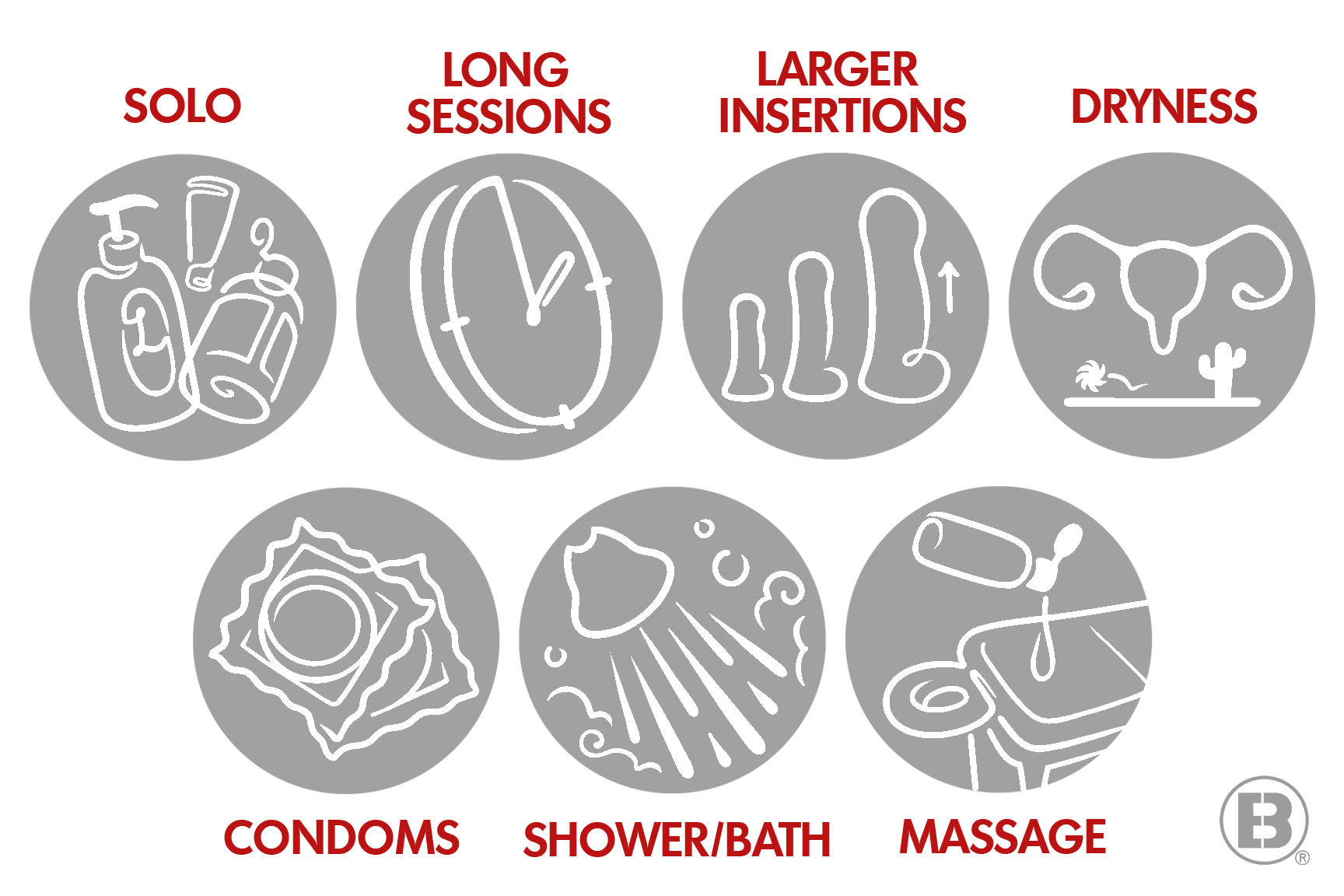
People commonly reach for lube during:
- Solo play with sex toys
- Vaginal intercourse
- Anal play or anal sex (the body doesn't self-lubricate here, so this one isn't optional)
- Longer sessions where friction builds over time
- Menopause or hormonal dryness
- Postpartum dryness (after medical clearance)
- Condom use, for added comfort and reduced breakage risk
- Sensual massage and foreplay
- Trying new positions or larger toys
If it improves comfort or pleasure, that's reason enough. There's no wrong time.
How to Use Lube
The mechanics are simple, but a few details make a real difference:
Start with more than you think you need. A quarter-sized amount is a good starting point for most water-based lubes. You can always add more as you go!
Apply to both partners, or the toy and the body, not just one. Fingers, shafts, vulvas, anuses, sex toys, and the like. Lube works best when it's on everything that creates friction!
Reapply before you think you need to, not after. Water-based lubes especially will dry down over time. A quick top-up before things feel less smooth keeps the whole experience consistent instead of course-correcting mid-session.
Warm it slightly if a formula feels cold or thick straight from the bottle. A few seconds rubbed between your palms is usually enough.
How to Choose the Right Lube for You
A few questions narrow the field fast:
What are you actually doing with the lube?
Using it with a silicone toy, for anal play, with a condom, or for a massage all point toward different answers. More on this in the quick-decision table for lube below.
Do you have sensitive skin?
If you're prone to irritation, look for fragrance-free, dye-free, paraben-free, and glycerin-free formulas with a short, simple ingredient list. We love Sliquid's lineup because several of their formulas contain little more than purified water and plant cellulose.
How much cleanup are you okay with?
Some lubes rinse away in seconds under running water. Others need soap and can stain fabric if you're not careful. Your tolerance for that trade-off matters more than people usually admit before they've made the wrong call at 1 a.m.
The Quick-Decision Table for Choosing Your Lube
|
If you're doing this... |
Reach for... |
|
Playing with a silicone toy |
|
|
Anal play |
|
|
Using a condom |
Water-based or silicone (check the label) |
|
A sensual massage |
|
|
Shower or bath sex |
|
|
Fisting or very large toys |
|
|
Oral play |
A flavored lube made for it |
|
Sensitive skin |
Aloe-based or a minimal-ingredient water-based formula |
The Top 8 Types of Lube, Explained
Let's get into the nitty gritty of each type of lube, from what it's best for to things to consider before you buy.
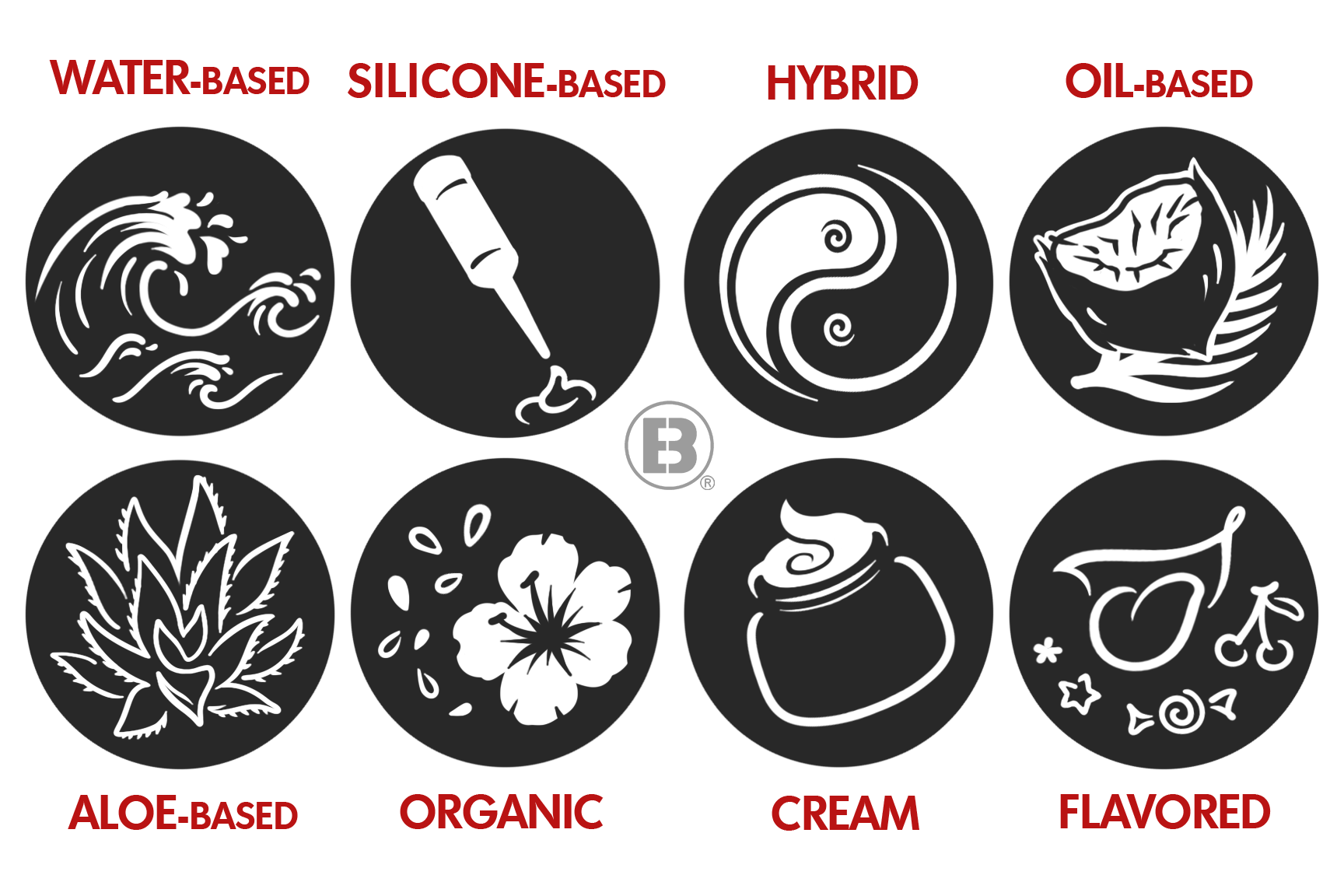
Water-Based Lube

Best for:
✨Sex Toys (including silicone)
✨ Vaginal play
✨ Condoms
✨ Sensitive skin
✨ Everyday use
The most versatile category in this entire guide, and the best place to start if you're not sure where to start at all.
Water-based lube plays well with nearly everything, including silicone toys, which alone makes it worth keeping on hand even if you eventually add others to your collection.
It rinses away with nothing more than water and is the safest default when you're testing out a new toy or a new partner..
Pros:
✅ Compatible with nearly every toy material
✅ Easy to clean
✅ Generally condom-safe
Considerations: dries faster than other types so reapplication is part of the deal, and some formulas can turn slightly tacky if left too long without topping it off.
Our picks:
Sliquid Naturals H2O ($9.99) — glycerin-free, silky, a strong choice if you have sensitive skin and want the fewest variables.
Fuck Water Clear ($12.99) — a slicker, more cushioned texture built for longer sessions, popular with couples and toy play alike.
Sliquid Sassy ($9.99) is a thicker water-based option built for anal specifically.
Silicone Lube

Best for:
✨ Shower or bath sex
✨ Anal play
✨ Long sessions
✨ Minimal reapplication
Where water-based is the reliable everyday choice, silicone is the one you reach for when you want the sensation to last. It doesn't dry down, doesn't wash away in the shower, and needs far less product to cover far more ground.
Pros:
✅ Long-lasting, smooth glide
✅ Performs well in water
✅ Very little product needed per use
Considerations: harder to clean off skin than water-based, can stain some fabrics, and not compatible with silicone toys
Our picks:
Überlube ($21.99) — a genuinely elegant formula, minimal ingredients, and holds FDA 510(k) Class II medical device clearance, which is a real, checkable regulatory status rather than just a marketing claim. The brand itself states it's used in OB-GYN practices, worth knowing even though that specific claim comes from the manufacturer rather than an independent source.
Pjur Original ($16.99) — a long-trusted classic, dependable for intercourse and extended play alike.
Hybrid Lube

Best for:
✨ Couples who want something more long-lasting than water-based
Hybrids blend water and silicone into one formula, aiming for the best of both: a smoother, longer-lasting glide than pure water-based, with meaningfully easier cleanup than pure silicone.
Pros:
✅ Longer-lasting than water-based
✅ Smooth texture
✅ Easier cleanup than silicone
Considerations: not safe for every silicone toy, though less reactive than pure silicone lube. Check the toy manufacturer's guidance, or do a small spot test first if you're unsure.
Our picks:
Sliquid Silk ($9.99) — a soft, natural-feeling glide that's comfortable for everyday use.
Wicked Hybrid ($23.99) — built specifically for slickness and endurance over a longer session.
Oil-Based Lube

Best for:
✨ Sensual massages
✨ External stimulation
✨ Hand play
✨ Extended sessions
Rich, thick, and indulgent, oil-based lubricants are less about penetrative sex and more about massage, hand play, and external stimulation, where their long-lasting, skin-nourishing texture actually shines.
Pros:
✅ Very long-lasting
✅ Rich, silky feel on the skin
✅ Excellent for massages and foreplay
Considerations: not latex condom-safe. Oil breaks down latex and meaningfully raises the risk of breakage and cleanup takes real effort compared to water-based.
Our picks:
Earthly Body Edible Massage Oil ($8.99) — dual-purpose, built for massage that can transition seamlessly into more.
We also carry Boy Butter and Coconu, two well-regarded names in this category if you want to explore further.
Aloe-Based Lube

Best for:
✨ Sensitive skin
✨ Frequent intimacy
✨ More natural-feeling glide
Aloe-based formulas lean into soothing, skin-friendly comfort. They’re popular with people who want daily-use lubrication that feels closer to the body's own moisture than a typical gel.
Pros:
✅ Refreshing texture
✅ Gentle on skin
✅ Easy cleanup
Considerations: some formulas dry faster than a thicker water-based gel and may need more frequent reapplication
Our picks:
Dame Alu ($12.99) — an aloe water-based formula built for balanced, everyday comfort.
Sliquid Oceanics ($14.99) — organic and aloe-based, blended with unscented seaweed extract for a silky feel.
Organic Lube

Best for:
✨ Ingredient-conscious shoppers
✨ Sensitive skin
✨ Anyone prioritizing formula transparency
Organic lubricants prioritize naturally derived ingredients and cleaner, shorter formulas — a real draw if you're the kind of shopper who reads labels on everything else you put on your body too.
Pros:
✅ Fewer additives
✅ Clean ingredient lists
✅ Generally well-tolerated by sensitive bodies
Considerations: tends to run pricier, and "organic" isn't a strictly regulated term in this category, so it's worth actually reading the label rather than trusting the word alone.
Our pick:
Sliquid Organics Natural ($10.99) — a water-and-aloe base with a clean formula and silky glide, comfortable for toys and sensitive skin alike.
Cream Lubricants

Best for:
✨ Fisting
✨ Extra large sex toys/dildos
✨ Masturbation
✨ When you want cushioning and control, not just glide
Thicker, richer, and more cushioned than any liquid on this list — cream lubes stay exactly where you put them, which matters enormously for anything involving serious size, stretch, or extended hand play.
Pros:
✅ Thick, dripless texture
✅ Excellent for intense or size-focused play
Considerations: heavier than anything else in this list, and cleanup generally calls for soap rather than water alone.
Our picks:
Apothecary Fisting & Masturbation Cream ($22.99) by Tantus — an extra-thick water-based cream built specifically for exactly this use case, not a lube adapted from something else.
J-Lube ($24.99) is a powder-to-liquid formula built for fisting and extra-large toys — one bottle makes 6–8 gallons, so this is not a lube you'll run out of mid-session.
Flavored Lube

Best for:
✨ Oral Play
✨ Foreplay
✨ Couples looking to mix things up
Flavored formulas add a fun, playful layer to oral play and foreplay, and quality has improved dramatically over the artificially sweet, sticky versions that gave the whole category a bad reputation.
Pros:
✅ Playful variety
✅ Can improve comfort during oral
✅ Nice mood-setting option
Considerations: sweeteners can irritate some people, and flavored formulas aren't always ideal for internal use. Check the label for what it's actually built for before you commit.
Our pick:
Sliquid Swirl ($14.99) — built on the same pH-balanced Sliquid H2O base as the water-based favorites above, with flavoring added rather than starting from a sugary, artificial formula. A good example of flavored lube done right.
Explore our full flavored lube collection for more options.
Lube & Sex Toys: Avoid Ruining Your Toys with the Wrong Lube
Using the wrong lubricant with the wrong toy material can shorten a toy's life, so it’s worth five minutes of reading before you ruin something expensive.
|
Toy material |
Safe lube choice |
|
Silicone toys |
Water-based |
|
Glass toys |
Water-based, silicone, or hybrid (all generally fine) |
|
Metal toys |
Nearly any lube type is fine |
|
ABS plastic toys |
Water-based, silicone, or hybrid (all generally fine) |
|
TPE / TPR toys |
Use caution: check the manufacturer's specific guidance |
Why silicone-on-silicone is the one to actually remember: silicone lubricant and silicone toys share a similar chemical base so using them together can do things like softening the surface, swelling, or turning it permanently tacky, since the lube essentially acts as a solvent on the toy's material.
When in doubt, water-based is always the safe default.
What NOT to Use as Lube
A few household products get recommended as lube "hacks" online, and most of them come with real trade-offs worth knowing before you reach for them.
Vaseline / petroleum jelly. Not condom-safe (it breaks down latex the same way oil does). An NIH study found that products made with mineral oil, an ingredient commonly found in vaseline/petroleum jelly, decrease the strength of condoms by 90%.
Plus, it's difficult to fully clean off skin or toys. Residue that lingers can trap bacteria rather than rinse away.
Coconut oil. Some people do use it, and it's a popular natural option for skin-to-skin play. But like any oil, it's not compatible with latex condoms, and it hasn't been formulated or tested specifically for intimate use the way a commercial lubricant has.
Baby oil or olive oil. Same core issue as coconut oil: not condom-safe, not designed for this specific use, and more likely to cause irritation over repeated use than a product actually formulated for the body.
If you want the natural feel these products offer without the trade-offs, an oil-based lube made specifically for intimate use gives you that same rich texture with actual safety testing behind it.
What is the best lube for anal play?
Short answer: thick water-based or silicone lube, and this is one situation where the "just add a little" mindset doesn't apply.
Unlike the vulva, the anus doesn't self-lubricate at all, and the tissue there is thinner and tears more easily. That makes lube non-negotiable for anal play, not just a nice-to-have. It's worth using more than you think you need, reapplying often, and going slower than feels necessary at first.
Silicone lube is the go-to pick for most people. It doesn't dry down mid-session the way water-based formulas can, so you're not stopping to reapply right when things are finally comfortable.
One material note worth repeating: if silicone toys are part of the mix, skip silicone lube. Pair silicone toys with a thick water-based formula instead, and save the silicone lube for anal play without toy contact, or for toys made of glass, metal, or ABS plastic.
Is lube safe for shower sex?
Yes, with the right choice. Water washes away your body's natural lubrication quickly, which is exactly why shower or bath intimacy often feels less smooth than expected.
Silicone lube is the strongest pick here, since it resists water rather than rinsing away with it.
A few practical notes: use a non-slip mat, skip glass bottles in a wet shower, rinse surfaces after use, and move slowly so you don’t fall!
Can you eat lube?
Yes, some of it, in small amounts, if it's designed for that, but lube is not a snack.
Plenty of lubricants are formulated for oral, and flavored lubes make oral play more enjoyable. But "safe if it happens" and "meant to be swallowed" are two different things.
Read the label, stick to lubes actually made for oral use if that's the plan, and stop if anything feels off.
Ingredients to Watch Out For
Reading past the marketing on a lube bottle takes about thirty seconds and changes how well a formula works for your body.
Glycerin is a sweet humectant that keeps lube smooth and affordable, but it can contribute to irritation or yeast imbalance with repeated use in some people. If you're prone to either, look for a glycerin-free formula.
Parabens are preservatives that extend shelf life. The FDA considers parabens safe within approved limits, but paraben-free options exist for anyone who'd rather keep things simple.
pH matters more than most people realize. A healthy vagina sits around 3.5-4.5 and a lube far outside that range can disrupt that balance. Cheap pH testing strips let you check a formula yourself instead of relying on the label.
Osmolality is how concentrated a water-based lube is. A 2012 NIH-funded study in PLOS ONE tested common lubricants against vaginal and rectal tissue and found that hyperosmolar water-based formulas caused measurable tissue damage, while iso-osmolar water-based and silicone lubricants didn't. It's part of why silicone lube is so often recommended for anal play specifically.
Frequently Asked Questions
What's the difference between water-based and silicone lubricants? Water-based lube feels light, cleans up easily, and is compatible with nearly every condom and toy material, making it ideal for everyday use.
Silicone lube lasts significantly longer, requires less reapplication, and performs well in water, but it should never be paired with silicone toys.
Can I use coconut oil as lube? Some people do, but it isn't suitable for every situation. Oil-based products, including coconut oil, should never be used with latex condoms, since oil breaks down latex and increases the risk of breakage. Commercial lubricants are also formulated and tested specifically for intimate use in a way household oils aren't.
Is lube safe to use with condoms? Yes, when you choose the right type. Water-based and silicone-based lubricants are generally safe with latex condoms, while oil-based lubricants should be avoided with latex entirely.
Can I use lube with sex toys? Yes, water-based lube is the safest, most universal choice across nearly every toy material, including silicone, glass, stainless steel, and ABS plastic.
Does lube expire? Yes. Like most personal care products, lubricants have a shelf life, and using an expired one can affect texture, stability, and its preservative system. Replace anything that's changed in color, smell, or consistency.
Can lube cause irritation? Most people use lubricants without any issue, but sensitivities happen. Fragrances, flavors, warming agents, botanical extracts, and certain preservatives are the most common culprits. If irritation continues after switching products, it's worth checking in with a healthcare provider.
When should I see a doctor about dryness or discomfort? Occasional dryness is common and usually not a concern, but persistent dryness, pain during intercourse, unusual bleeding, or ongoing irritation are worth having evaluated. The American College of Obstetricians and Gynecologists recommends consulting an OB-GYN if symptoms don't improve after trying an over-the-counter moisturizer or lubricant.
The Bottom Line
There's no trophy for pushing through friction. The best lube is the one that actually works for your body, your toys, and whatever you've got planned tonight.
At Bondesque, our collection is curated from brands we genuinely trust — Überlube, Sliquid, Dame, Gun Oil, Pjur, Swiss Navy, Wicked, Intimate Earth, Coconu, Fuck Water, Boy Butter, and Tom of Finland — covering every type in this guide: water-based, silicone, hybrid, oil-based, aloe, organic, cream, and flavored. Beginner, veteran, couple, or solo act, there's a bottle in here that fits.
Ready to shop? Browse our full Lube & Stimulation collection, every type covered here, in one place.


